
Our Technology
What we do and how we do it
The Sterilize-Aer unit is designed to do more than just filter the air — it actively destroys and removes airborne threats; viruses, allergens, bacteria, fungal spores and harmful particulates such as PM10s, PM2.5s, PM1.0s and even nano-plastics released by tyres and traffic. The system tackles both biological and environmental pollutants and is specifically designed to mitigate the spread of emerging infections in new suspected epidemics and pandemics.
This makes Sterilize-Aer the most comprehensive clean-air technology available today.
Backed by rigorous third-party validation and protected by awarded and pending patents, our platform is designed for seamless integration into both new and existing infrastructure across critical sectors.
At its core, the system uses multiple technologies working in a sequence of stages. Each stage targets a specific class of contaminants, ensuring a layered and thorough treatment process. Built with a fail-safe design, the Sterilizer-Aer continues to operate effectively even if one stage encounters an issue, guaranteeing uninterrupted performance and protection.
Unlike traditional air purifiers, Sterilize-Aer requires little to no intervention. Its self-cleaning design keeps operational maintenance to a minimum. Fully automated, the system runs continuously in the background — delivering reliable, safe, and cost-efficient clean air without the burden of ongoing upkeep.
Requiring no filters to treat the air, the system requires much less power to operate giving typical energy savings of around 90% over current HVAC systems. This makes retrofitting the Sterilize-Aer technology into existing systems financially sensible.
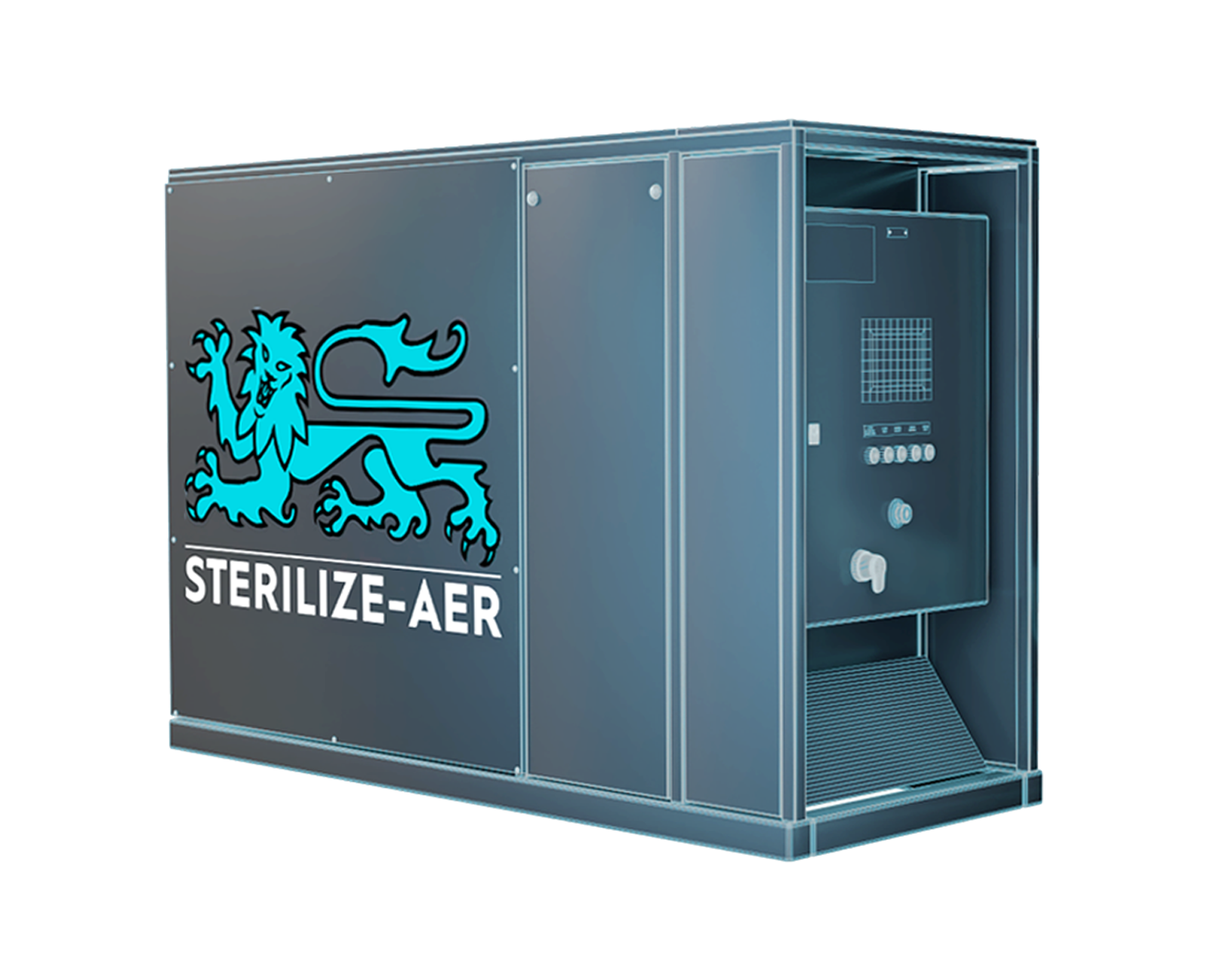
Prototype fabrication and validation
A prototype air treatment system has been developed to match the airflow requirements of a standard 600 x 300 mm ducted HVAC system.
- Testing and validation were carried out in collaboration with the University of Ulster (Coleraine Campus, School of Biomedical Sciences), the National Physical Laboratory (NPL), and AirMid Healthgroup Limited. To ensure both safety and accuracy, surrogate non-pathogenic bacterial spores and harmless virus particles were used in the process.
- The results confirmed the system’s ability to effectively remove and destroy bacterial spores, virus particles, allergens, and micro- to nano-sized particulates from the air, achieving a minimum reduction of five log levels. Theoretical modelling suggests reductions greater than nine log, with further testing planned to verify.
